TimeFlow AI
Data simulated for demo use only
What we built: Smarter time tracking for field teams
For field workers, every minute matters. Yet time tracking is often slow, manual, and disconnected from the reality of daily work.
TimeFlow AI was born from a simple but powerful idea: if AI can understand human speech, it can also understand how work actually happens and remove administrative friction from people in the field.
This POC shows how a team can turn a long-standing operational pain point into a natural, efficient, and automated workflow.
The challenge: Manual logs that slow down real work
The demo places us in the daily routine of a construction field worker:
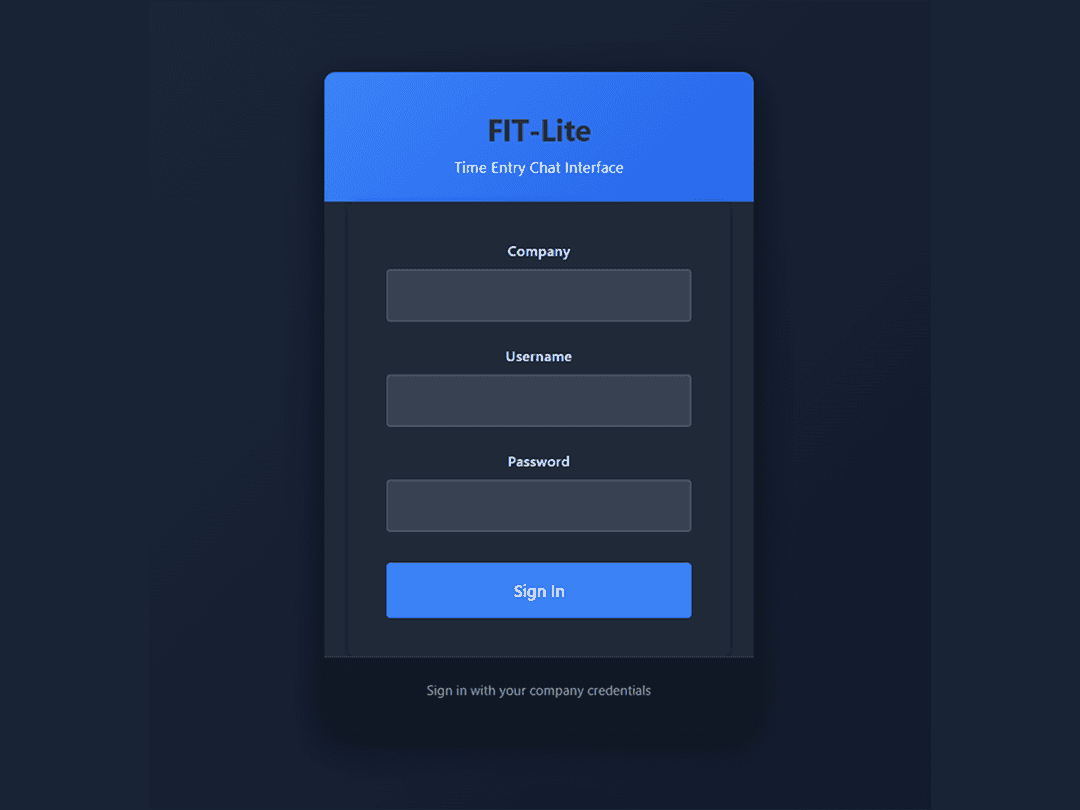
Opening a complex mobile app every day
Manually selecting tasks, phases, and activities
Spending 20 to 30 minutes per day logging time
Making inevitable mistakes, such as forgotten or duplicated entries
Losing 2–3 hours per week to repetitive administrative work
The outcome: inaccurate reports, slow approvals, and limited visibility for managers. The core issue was clear: a process meant to be simple was stealing time, focus, and accuracy.
How we built it: Voice-powered, context-aware time tracking
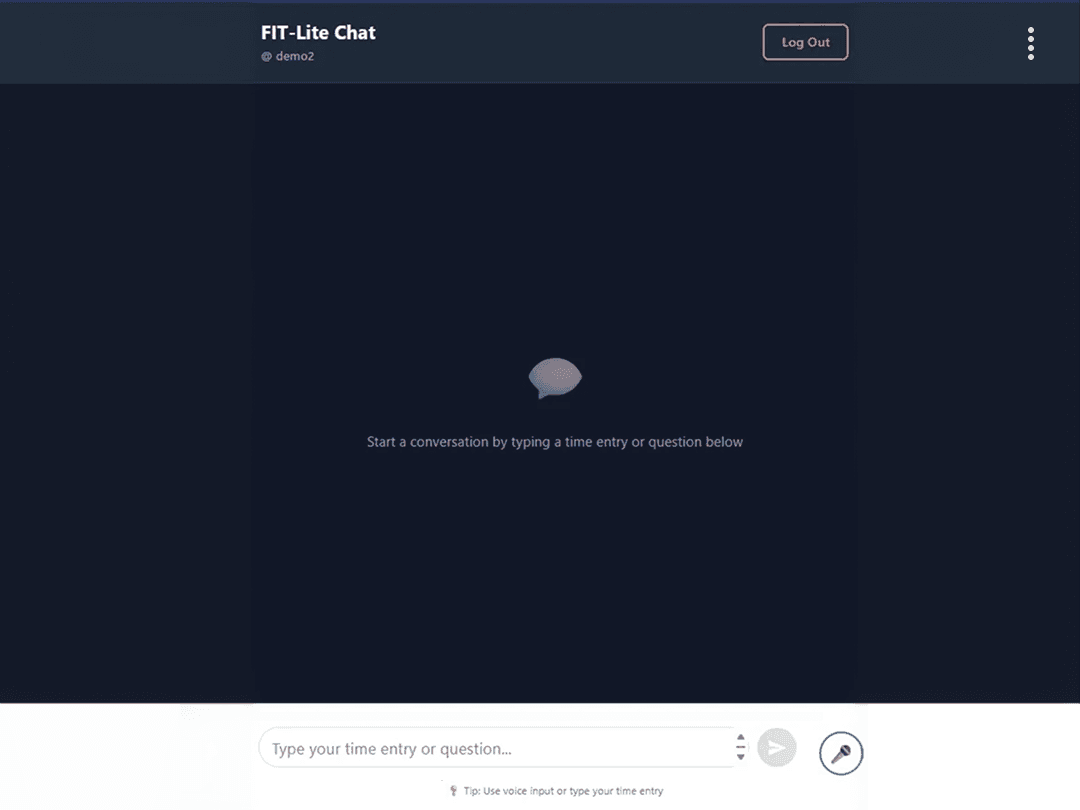
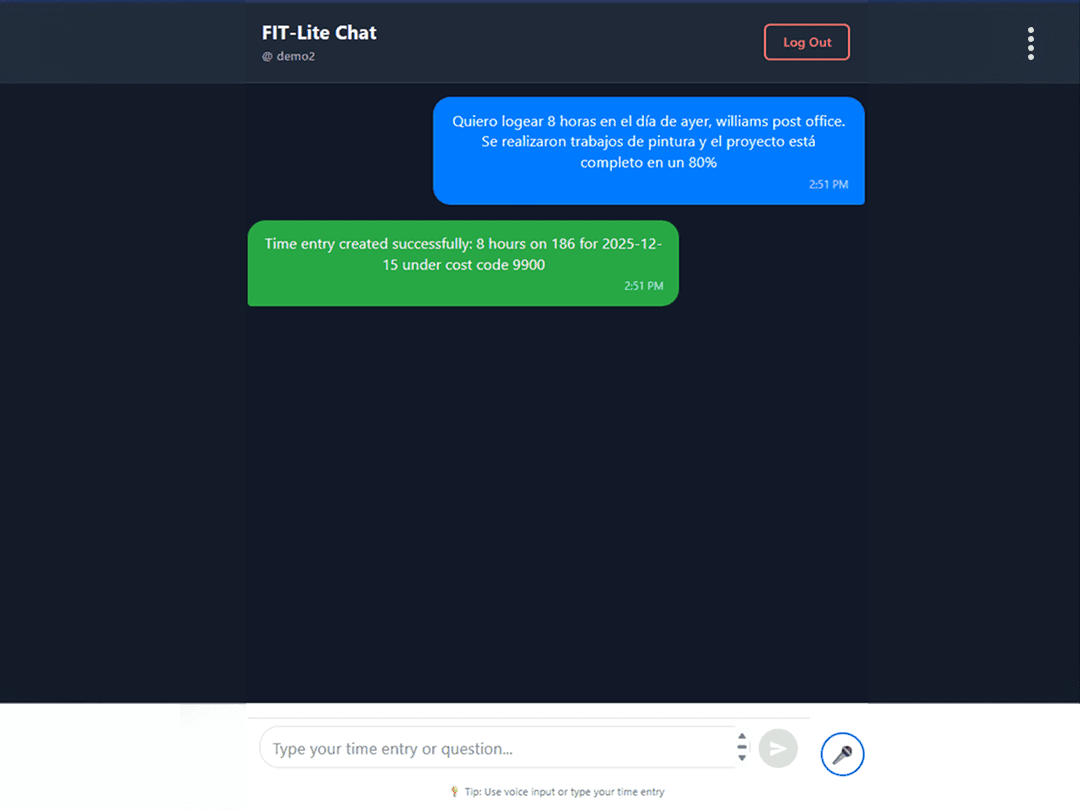
The team envisioned a system where workers don’t log time, they simply tell it. TimeFlow AI transforms natural speech into structured, validated time entries ready for internal systems. The POC includes:
Voice input with contextual understanding: Workers describe their activity (“Worked on the electrical phase of Project Delta from 8 to 12”), and the AI interprets:
Project
Work order or phase
Duration
Delays or anomalies
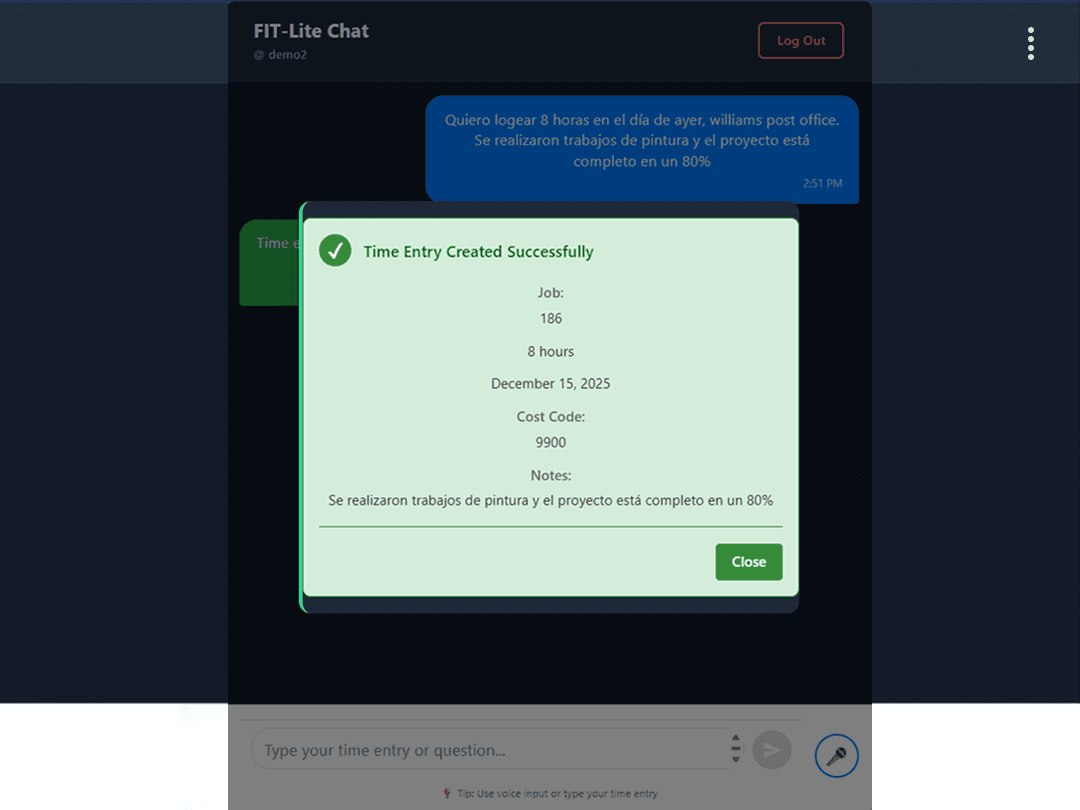
Automatic time-entry generation: The system:
Assigns hours to the correct project and phase
Calculates effective time
Detects inconsistencies
Updates management systems automatically
Adaptive AI processing: TimeFlow AI learns from work patterns and suggests:
Likely work orders
Frequently used phases
Automatic completion when information is missing
Smart verification for managers: The AI validates entries, flags anomalies, and accelerates approvals, reducing administrative load. The guiding idea is simple: let work flow, and let AI take care of the rest.
What changed with this POC: Time tracking that works for people
Thoughtful ideas and purposeful AI can transform an overlooked process into an intuitive, human-centered experience, and deliver clear value:
Time logging up to 10× faster through voice input
Significant reduction in human error via automated interpretation and validation
Lower administrative burden for managers
Field workers regain hours to focus on real work
A process redesigned around humans, not forms.
The team
Johan Tabori
DM

Santiago Fuentes
Senior Dev
Mariano Brolio
Senior Dev

Jere Lopez
Senior Dev

Axel Antunez
Senior Dev
Industries
AI Agents
Construction
More Projects
Winner
AIAIOH
2nd Place
KnowFlow AI
3rd Place
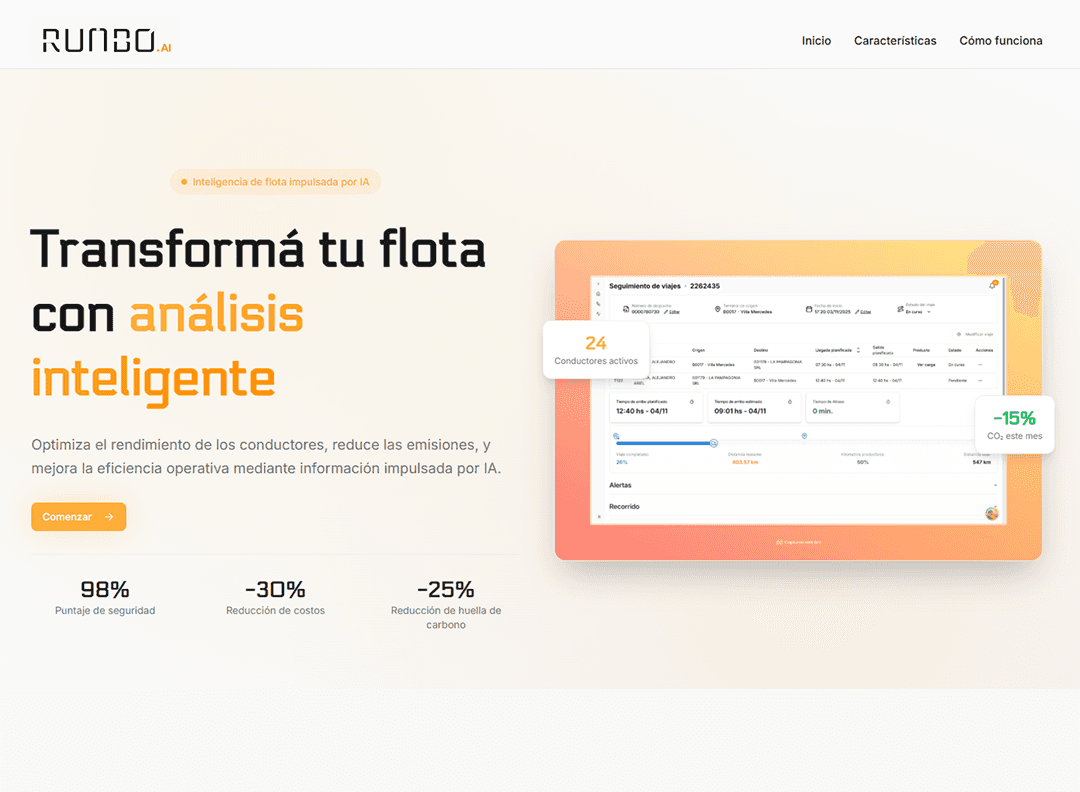
Rumbo.AI
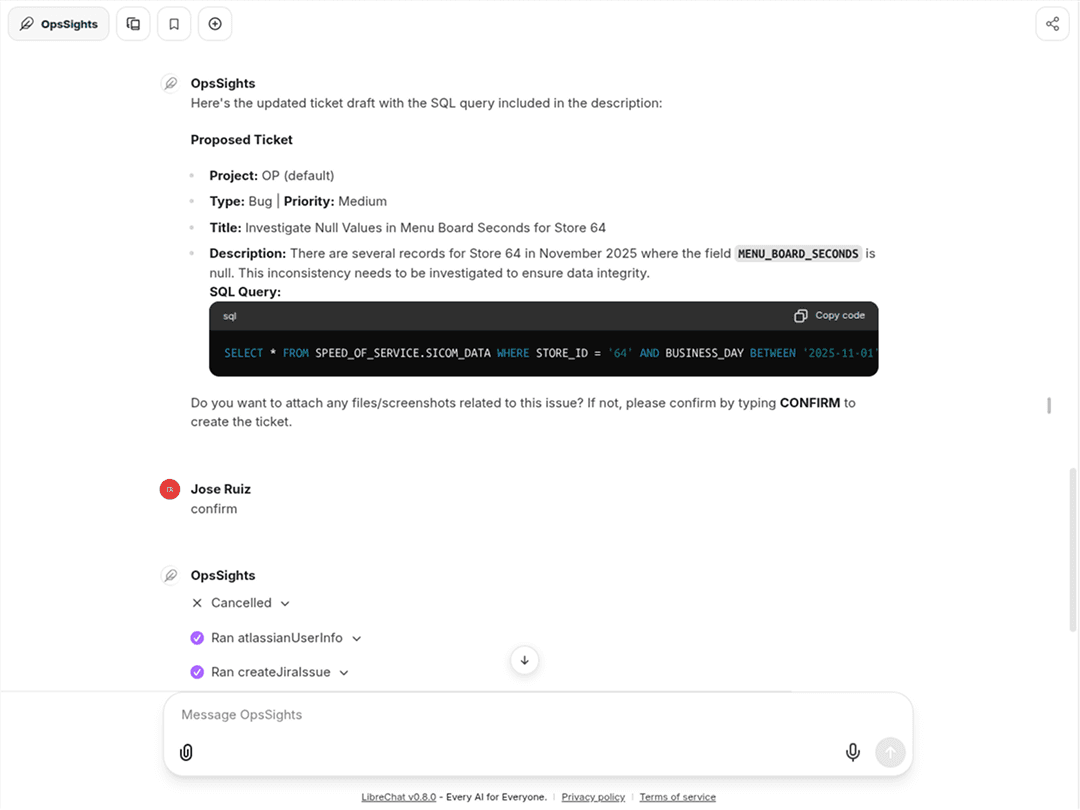
OpsSights
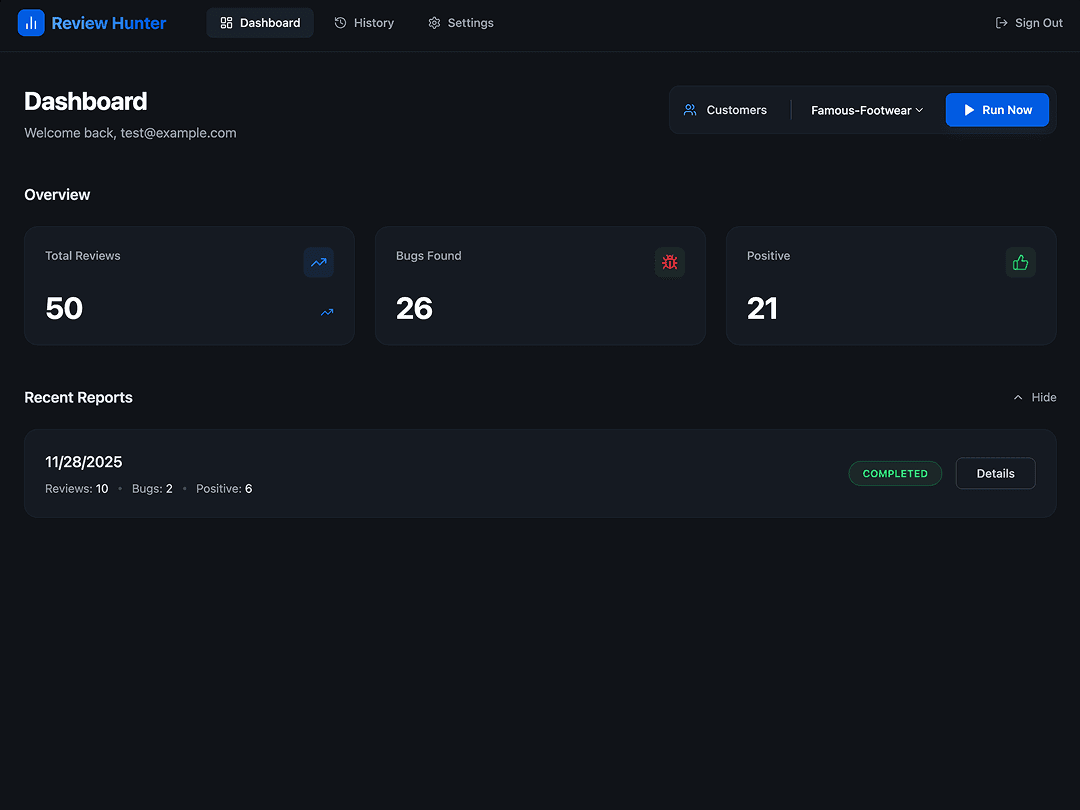
Review Hunter
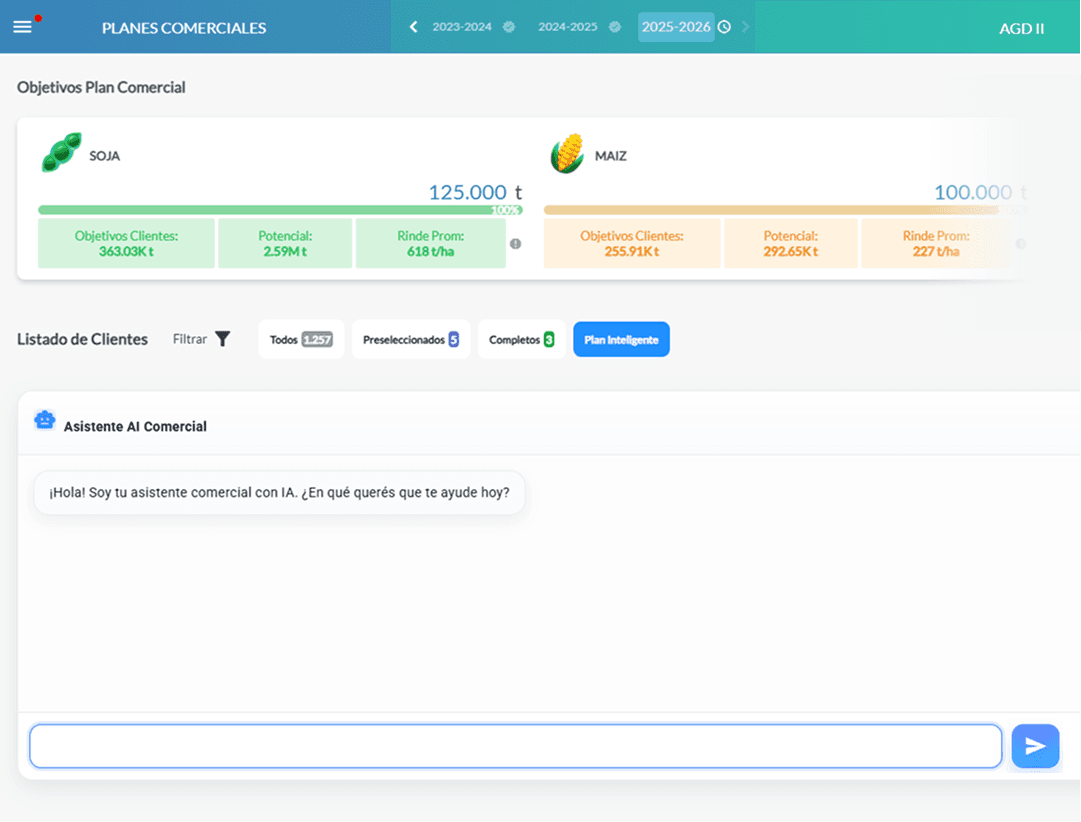
Planting AI
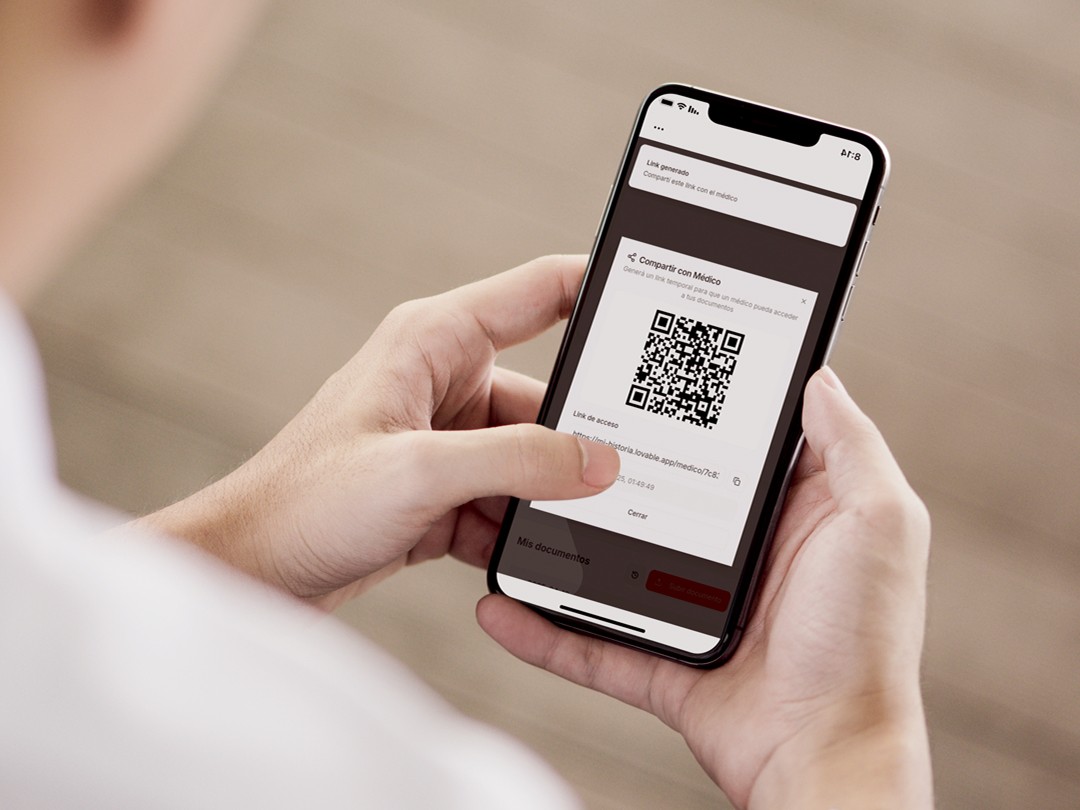
MiHistorIA: Patient-centered unified medical record
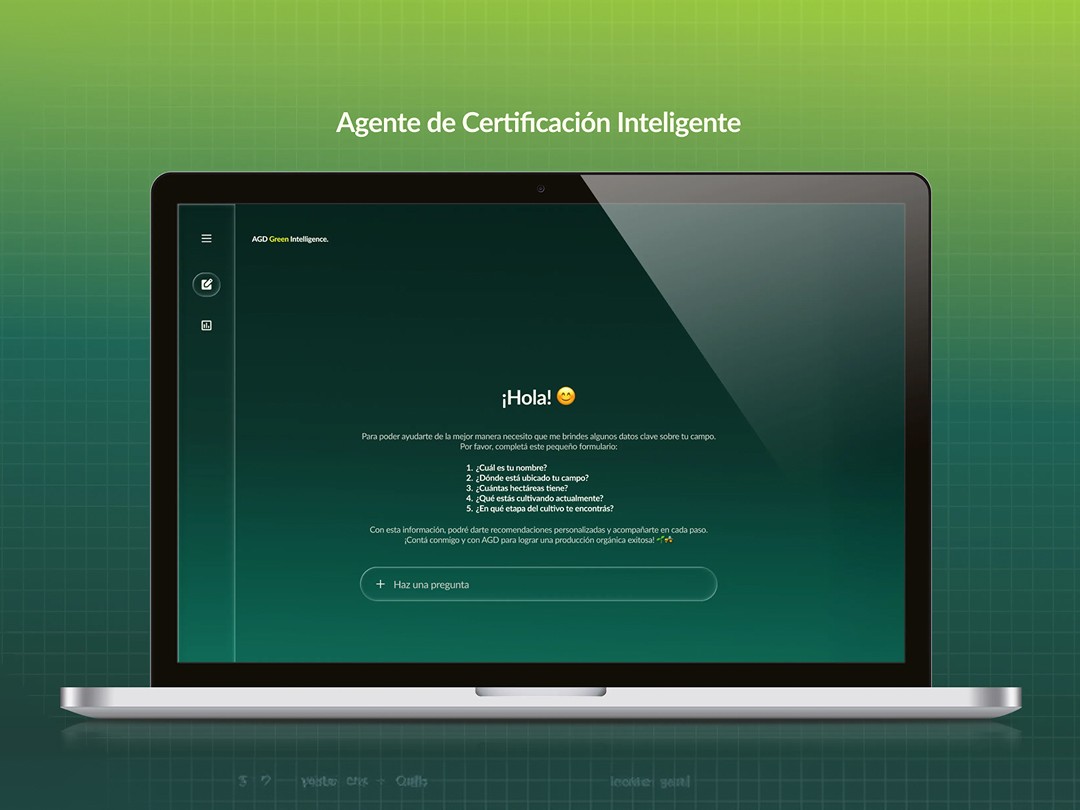
Green Intelligence: Turning sustainability into competitive advantage
Reskilling for the Future
Learning turned into action
We are a community driven by curiosity and collaboration. Reskilling is part of our everyday practice because change happens through us. The future is made by believers, and the revolution is human.